AI search and fewer clicks: what the data actually shows
AI summaries changed how search results look, and click numbers are falling. Here is what is measured, what each number leaves out, and what a business can influence.
- Written by
- Manuel Gut
- Responsible editor
- Manuel Gut
- Updated
6 min read
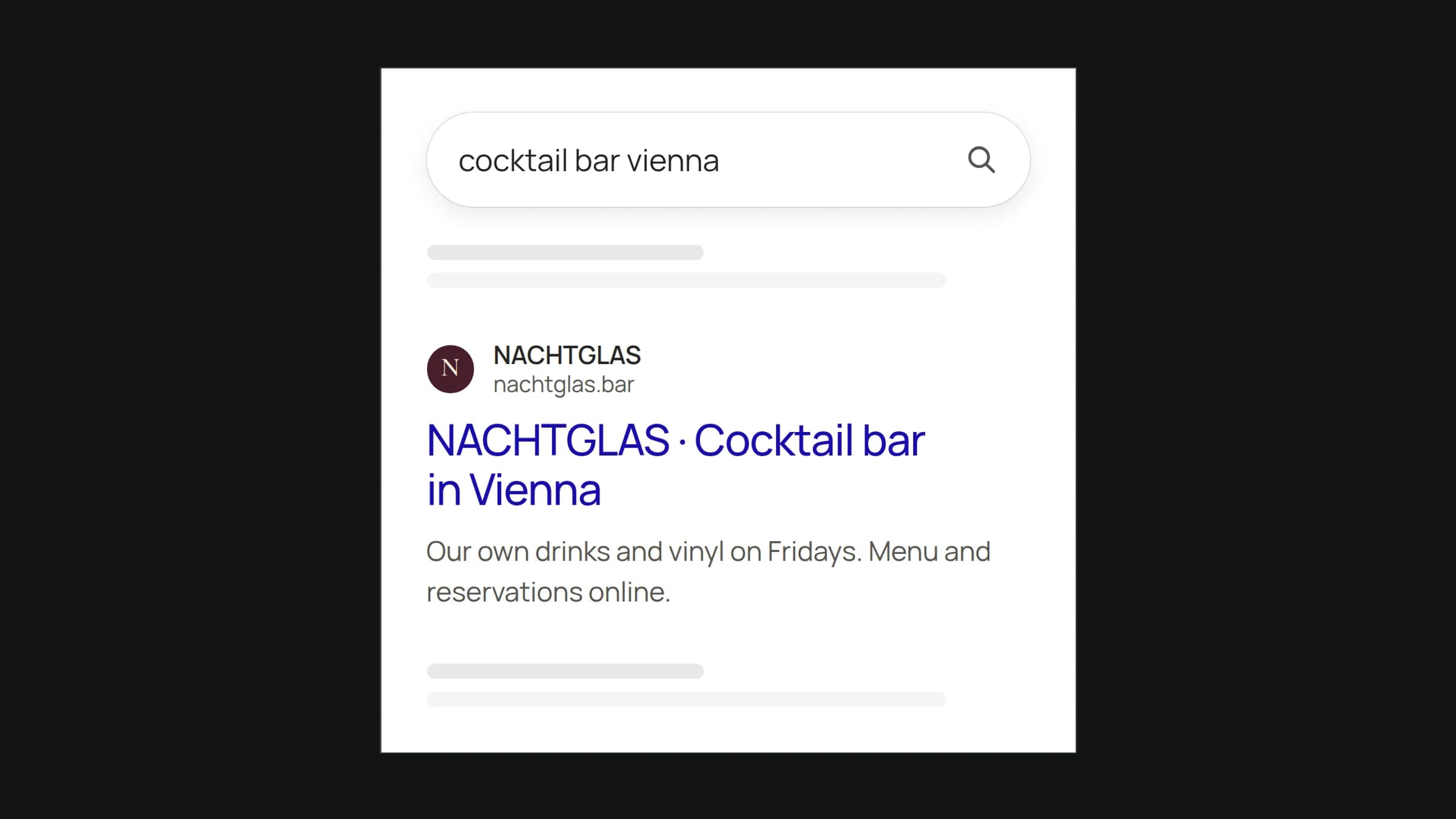
Search engines increasingly answer the question themselves instead of only listing links. Several independent datasets now measure what that does to clicks. They point in the same direction, and each one has limits you need to know before you quote it.
We write from Vienna, Austria, so the local availability dates below are Austrian ones. The click studies are not: two are from the United States and one covers German-speaking Europe. This post states what is measured, where, and by whom, as of 16 October 2026.
What arrived when
Google's AI-written summaries, called AI Overviews, reached Austria in spring 2025. A trade report dated 26 March 2025 names Austria among nine further EU countries in that expansion.1 The report gives no launch date specific to Austria.
The separate AI Mode came later. Google announced on 7 October 2025 that the mode was expanding to more than 35 additional languages and over 40 additional countries and territories, including many in Europe, without naming individual countries.2 Google's own availability list today includes Austria, Germany and Switzerland for AI Mode.3
So both forms of AI search have been live in this market for about a year or more.
What the click data shows
| Study | Period and scope | Result |
|---|---|---|
| Pew Research Center, published 22 July 2025 | 68,879 searches by 900 US adults, browsing data from March 2025 | A traditional search result was clicked on 8 percent of visits with an AI summary, against 15 percent without4 |
| Ahrefs, published 4 February 2026 | 300,000 keywords, December 2025 data | Where an AI Overview appears, the click-through rate of position one is about 58 percent lower5 |
| Similarweb, published 10 June 2026 | panel data, no country named | 68 percent of all Google searches end without a click to any website6 |
The limits belong with the numbers. The Pew data is American and covers a single month. Ahrefs measures desktop click-through rates against a December 2023 baseline and calls the relationship a correlation rather than a proven cause. The Similarweb figure comes from a panel, weights mobile and desktop use differently, and names no country.
For German-speaking Europe there is a fourth measurement. SE Ranking reported on 3 June 2026 that the organic share of total website traffic in Austria, Germany and Switzerland fell from 44.03 percent to 38.48 percent, measured across 101,574 tracked websites and comparing the 2025 annual average with January to April 2026.7
Fewer clicks is not the same as fewer customers
A click is not an order. Many searches that now end in a summary would never have brought anyone into a business: opening hours, definitions, short factual questions. Those visits lasted seconds.
The searches that lead to work usually involve several steps: compare, check prices, read reviews, call. Those steps do not disappear because a summary sits on top of the page.
So the honest summary is this. Visits fall measurably. Inquiries do not automatically fall by the same amount. If you only watch visits, you are judging your business by the wrong number.
How much traffic AI answers send back
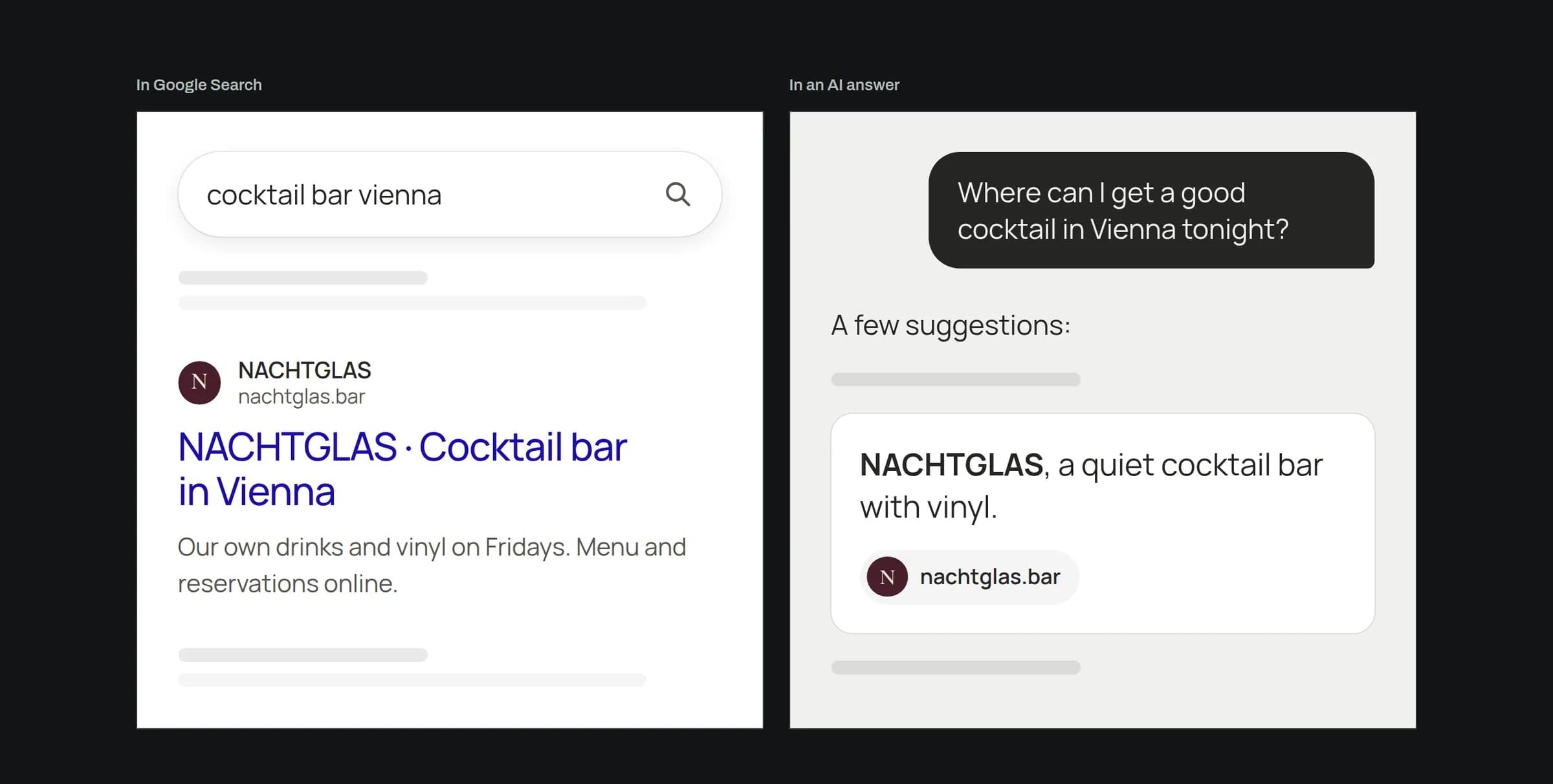
This is the number most often left out. In German-speaking Europe, referrals from AI services to websites averaged 0.38 percent of all traffic in 2026, after 0.26 percent the year before.7 Within that small share, ChatGPT accounted for 65.42 percent and Perplexity for 15.30 percent.7
The arithmetic is uncomfortable. Search gives up more than AI services hand back in referrals. Anyone promising that optimization for AI answers will replace the lost search traffic one for one is promising something the published data does not support.
What advertising changes, and what it does not
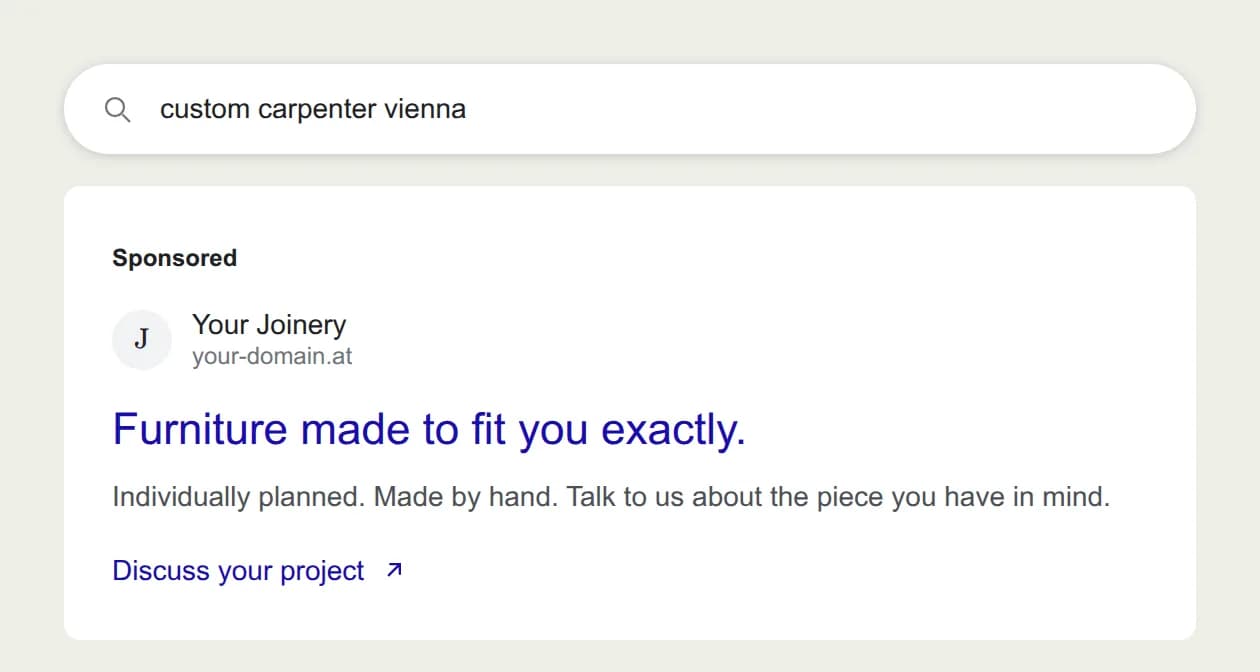
Ads inside AI Overviews cannot be booked in Austria or anywhere in the EU. Google lists only English-language markets outside the EU for that placement: Australia, Canada, India, Indonesia, Kenya, Malaysia, New Zealand, Nigeria, Pakistan, the Philippines, Singapore and the United States.8
What still applies everywhere: according to the same page, classic search ads are eligible to show above or below an AI Overview in all 200 plus markets where AI Overviews are available.8 There is no separate control and no separate reporting for that placement.
What a business can influence
Four things are in your hands:
- Whether your content answers a question directly, ideally in the first paragraph of the right page.
- Whether your name, address, services and opening hours match everywhere, on the website and in your Google Business Profile.
- Whether structured data describes your business in machine-readable form.
- Whether your site allows the AI providers' crawlers at all, instead of blocking them wholesale.
What is not in your hands is whether a language model names you in an answer. There is no submission, no booking and no guarantee. Any offer that promises a mention is describing something the seller does not control.
The uncertainty is widespread. In a survey of 426 small and mid-sized Austrian companies in the first quarter of 2026, 75 percent did not know whether their content appears in AI search systems at all.9
Measure this instead
Change the measurement before you change the content. A short, fixed list works: inquiries by form and phone, calls and direction requests from your business profile, the search queries you are found for, and the answer new customers give when you ask how they found you.
Record the starting point before you change anything. And keep in mind that falling visits with steady inquiries are not an alarm. They are what the data above would predict.
Notes
-
thekeyword.co, "Google rolls out AI Overviews to nine more EU countries", 26 March 2025, accessed 16 October 2026. This is a trade publication, not Google's own blog.
-
Google, "AI Mode is now available in more languages and locations around the world", 7 October 2025, accessed 16 October 2026. The post names no individual countries.
-
Google Search Help, "Get AI-powered responses with AI Mode in Google Search", accessed 16 October 2026. The page carries no date. It also holds a separate country list for one individual model in AI Mode, which does not include Austria.
-
Pew Research Center, "Google users are less likely to click on links when an AI summary appears in the results", 22 July 2025, accessed 16 October 2026. The browsing data is from March 2025 and from 900 US adults.
-
Ahrefs, "Update: AI Overviews Reduce Clicks by 58%", 4 February 2026, accessed 16 October 2026. Desktop click-through rate against a December 2023 baseline; Ahrefs itself speaks of a correlation.
-
Similarweb, "Zero-Click Marketing", 10 June 2026, accessed 16 October 2026. Panel data with no country given, weighting mobile and desktop use differently.
-
SE Ranking, "KI-Traffic im DACH-Raum 2026", 3 June 2026, accessed 16 October 2026. Based on 101,574 tracked websites; the 2026 value is the average of January to April 2026. The study is published in German. 2 3
-
Google Ads Help, "About ads and AI Overviews", accessed 16 October 2026. The page carries no date and says nothing about AI Mode. 2
-
Coreflow, "Studie zur Digitalisierung österreichischer KMU 2026", accessed 16 October 2026. 426 telephone interviews in the first quarter of 2026, self-reported; the publisher sells search engine optimization itself. The study is published in German.
Sources
- 1Google rolls out AI Overviews to nine more EU countriesthekeyword.co, accessed 16 October 2026
- 2AI Mode is now available in more languages and locations around the worldGoogle, accessed 16 October 2026
- 3Get AI-powered responses with AI Mode in Google SearchGoogle Search Help, accessed 16 October 2026
- 4Google users are less likely to click on links when an AI summary appears in the resultsPew Research Center, accessed 16 October 2026
- 5Update: AI Overviews Reduce Clicks by 58%Ahrefs, accessed 16 October 2026
- 6Zero-Click Marketing: The SEO Strategy For A World Where Most Searches Skip Your SiteSimilarweb, accessed 16 October 2026
- 7KI-Traffic im DACH-Raum 2026SE Ranking, accessed 16 October 2026
- 8About ads and AI OverviewsGoogle Ads Help, accessed 16 October 2026
- 9Studie zur Digitalisierung österreichischer KMU 2026Coreflow, accessed 16 October 2026