Austria's Accessibility Act: what applies to websites, online shops and bookings since June 2025.
Since 28 June 2025, Austria's Accessibility Act (BaFG) applies to websites and apps through which consumers conclude a contract, such as online shops, ticket sales and online bookings. Micro-enterprises with fewer than ten employees and at most €2 million in turnover or balance sheet total are exempt.
- Written by
- David Nawloka
- Responsible editor
- David Nawloka
- Published
7 min read
What you will know afterwards
- You know whether your website, shop or booking falls under the Accessibility Act.
- You know the exemption for micro-enterprises and its limits.
- You know what an affected shop has to deliver, technically and as information, and who enforces it.
Since the summer of 2025, many businesses have heard that their website "now has to be accessible, or there will be fines". That is true for some, but not for many. What matters is not whether you have a website, but whether customers buy or book something through it, and how large your business is.
This post explains what Austria's Accessibility Act, the Barrierefreiheitsgesetz (BaFG), requires of websites, online shops and online bookings, as of 20 October 2026. It is not legal advice: if in doubt, check with the Austrian Economic Chamber (WKO) or your lawyer whether your business is affected.
Since when the Accessibility Act applies
The BaFG came into force on 28 June 2025.1 It implements EU Directive 2019/882, usually called the European Accessibility Act.2 The law covers certain products, such as computers and payment terminals, and certain services to consumers provided after 28 June 2025.1
For most websites, one item on that list is decisive: "services in electronic commerce".1 The Ministry of Social Affairs gives online shops as its example.3
Who the Accessibility Act applies to for websites
The law defines these services as services provided at a distance, by electronic means and at the individual request of a consumer, with a view to concluding a consumer contract through websites or mobile apps.1 A consumer is anyone who is not buying for their trade or profession.1
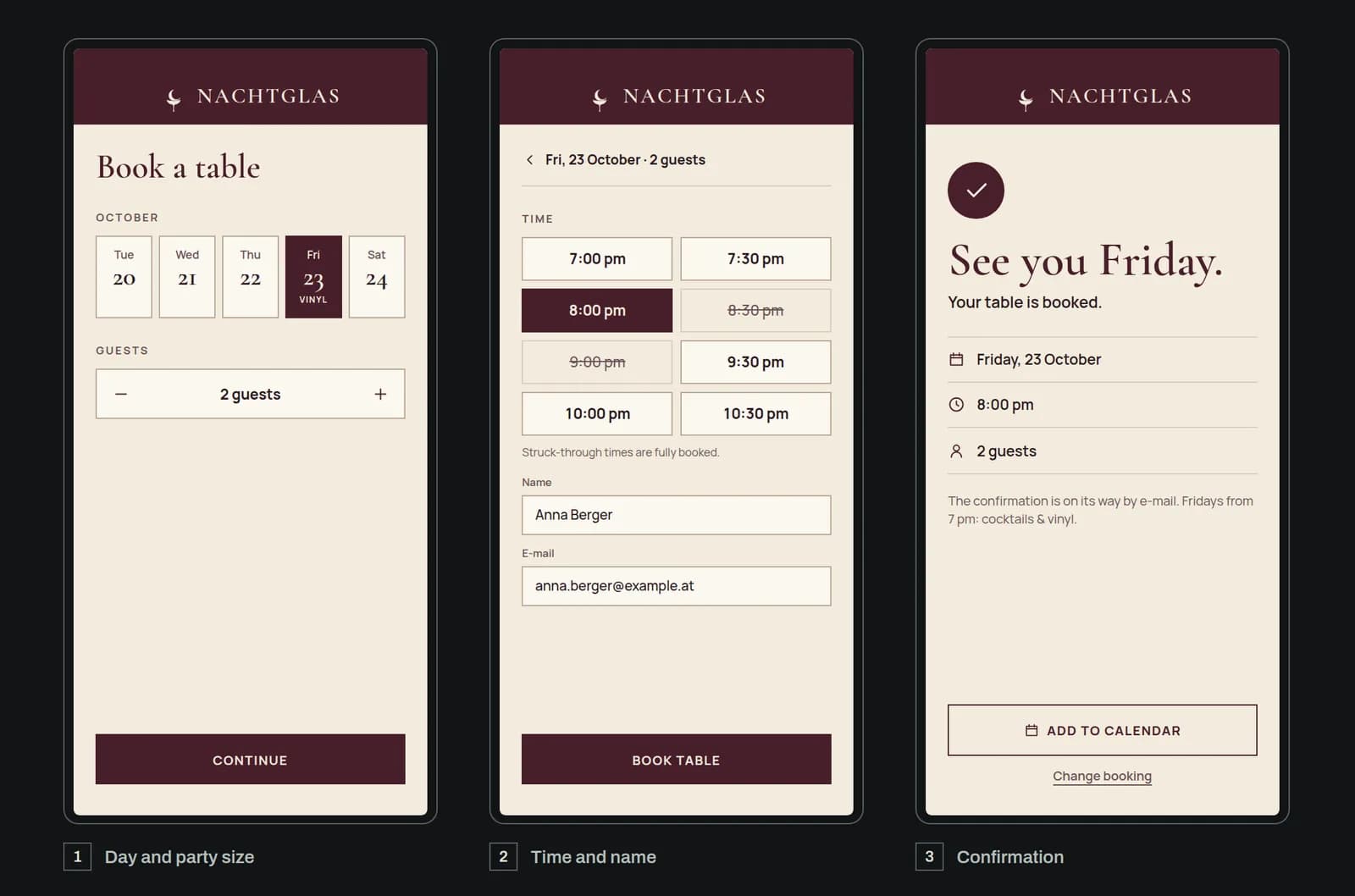
The WKO explicitly lists web shops and apps, hotel and travel portals with booking, online appointment booking tools, digital publications, and websites on which memberships and subscriptions are taken out.4 For online booking, the WKO says this applies even when the booked service itself would not fall under the law, for example a hotel room that a business sells directly online.4
Three questions help with a first assessment:
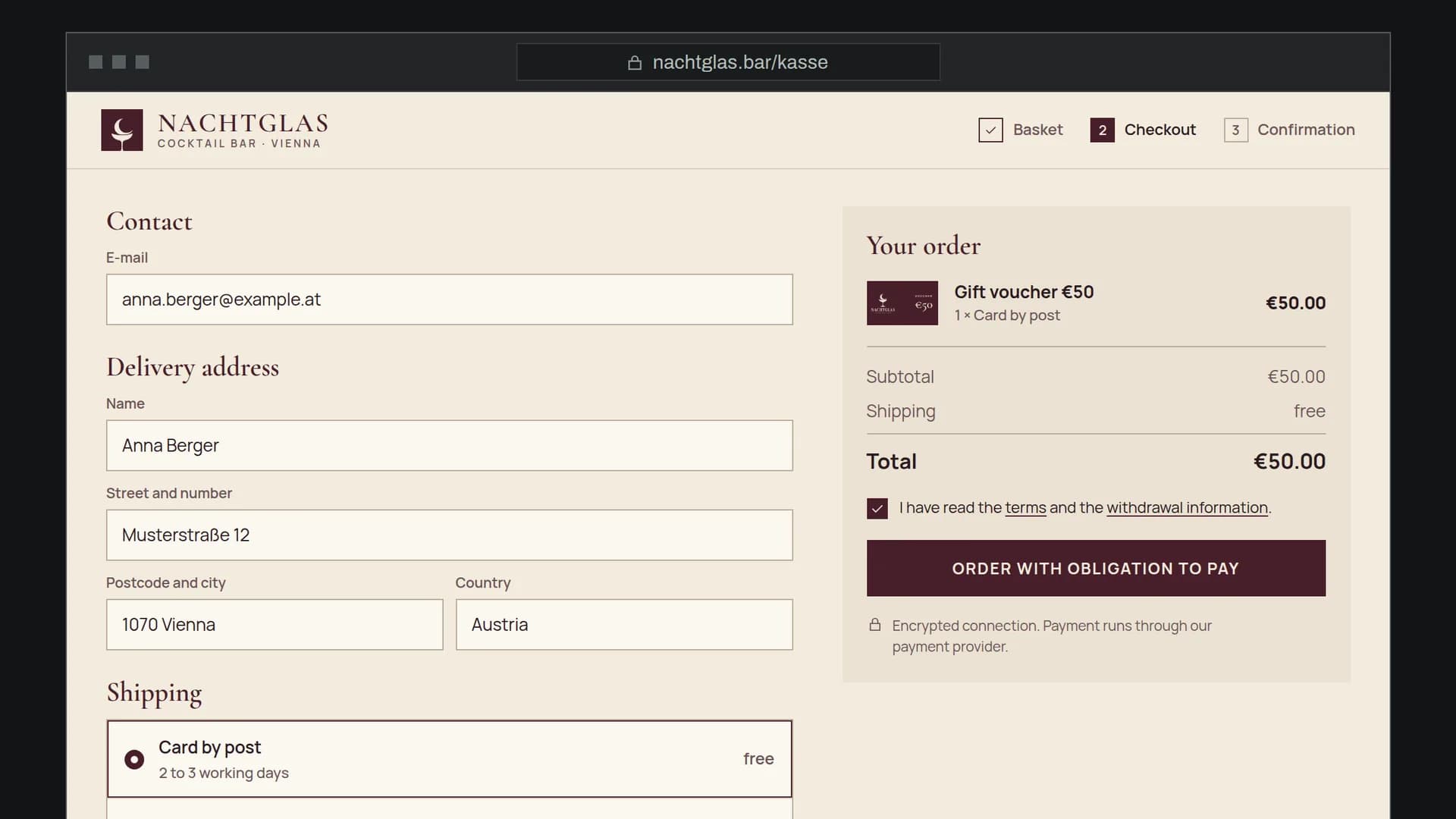
- Does a private person conclude a contract through your website or app? A purchase in a shop, a ticket, a booked appointment or table counts. A site that only informs and takes enquiries by form or phone is not electronic commerce.
- Do you sell to private persons? A shop that sells only to businesses is not covered by these rules.
- Is your business a micro-enterprise? Then the exemption in the next section applies.
If the sale runs through a third-party platform, such as an external ticket provider, the law does not apply to third-party content that you neither fund, develop nor control.1 In that case, ask the provider how its solution meets the requirements.
Exemptions: micro-enterprises
Micro-enterprises that provide services are exempt from the requirements and from all obligations relating to them.1 The Ministry of Social Affairs puts it plainly: micro-enterprises that only offer services do not have to comply with the law.3
A micro-enterprise employs fewer than ten people and has either an annual turnover of at most €2 million or an annual balance sheet total of at most €2 million.1 Both conditions must be met. A bar with twelve employees is therefore not a micro-enterprise, even if its turnover is well below the limit.
Three things to know:
- Anyone relying on the exemption must, on request, give the Sozialministeriumservice the documents needed to check it.1
- The WKO points out that rebuilding a shop later is usually more work than planning it accessibly from the start, in case the business grows.4
- Regardless of the BaFG, the Federal Disability Equality Act (BGStG) applies to goods and services available to the public.5 The WKO explicitly notes that it still has to be observed alongside the BaFG.4
The law also has exemptions for fundamental alterations and disproportionate burdens. Anyone invoking them must assess this, document it, keep it for five years and, for services, reassess at least every five years.1
What an accessible online shop has to do
The law states the requirement in general terms: websites, online applications and apps must be "perceivable, operable, understandable and robust".1 For electronic commerce it adds:1
- providing information on the accessibility of the products and services for sale, when the responsible economic operator provides it,
- making identification, security and payment functions accessible,
- offering identification methods, electronic signatures and payment services that are perceivable, operable, understandable and robust.
What this looks like in detail is set by a standard: services that meet harmonised standards published in the Official Journal of the EU are presumed to conform.1 According to the EU's AccessibleEU centre, that is currently EN 301 549 version 3.2.1, based on the Web Content Accessibility Guidelines (WCAG) 2.1 at level AA.6 Version 4.1.1 with WCAG 2.2 was published in September 2026. It only becomes the legal reference once the Commission cites it in the Official Journal.6
In a shop's daily life this means, for example: every checkout field has a visible label, everything can be operated with the keyboard, error messages say what to do, text has enough contrast, images have alternative text, and the page still works when zoomed in and on a phone. These examples are our translation of the four principles into practice, not the wording of the law. Responsive design is a foundation for this, but not enough.
Accessibility statement: what information a shop must publish
Affected businesses must state in their terms and conditions or a similar document how their service meets the requirements.1 This includes a general description of the service in an accessible format, the explanations needed to understand it, and a description of how the requirements are met.1 The information must be available to the public, in written and oral form, including in an accessible form, and kept for as long as the service is offered.1
Many shops publish this as a separate "Accessibility" page and link it from the footer and the terms. The law does not prescribe the name. What matters is that the information is correct and stays current: anyone who changes their service must also make sure the requirements are still met.1
Transition periods and fines
There is no general grace period for existing shops. The WKO states explicitly that existing web shops have also had to be accessible since 28 June 2025, unless an exemption applies.4 Transition periods exist only for contracts concluded before 28 June 2025 and for products a business already used for its service before that date, in each case until 28 June 2030 at the latest.1
Enforcement lies with the Sozialministeriumservice as the market surveillance authority.1 Consumers can report issues to it, as can the consumer association VKI, the Austrian Disability Council, the Federal Chamber of Labour and the WKO. The authority must say within eight weeks whether it is opening proceedings.1
If the authority finds a shortcoming, it first asks for corrections within a reasonable period and gives at least ten working days to respond.1 Offering a service that is not accessible is an administrative offence: up to €80,000, or up to €50,000 for small and medium-sized enterprises.1 Missing information as described in the previous section costs up to €40,000, or up to €10,000 for small and medium-sized enterprises.1
What to do first
- Assess. Answer the three questions above and check your headcount and turnover. Write down the result.
- Test the purchase path. Go through a purchase or booking using only the keyboard, zoom the page in and read the error messages. Where it gets stuck is your first task.
- Clarify external parts. Ask your payment or booking provider how its solution meets the requirements.
- Create the information page and link it in your terms.
- Keep it in mind when things change. New features, a new content management system or a new payment module need the same test. That is part of ongoing maintenance.
Whether a shop pays off for your business at all is covered in When an online shop pays off for your business. If you are planning a shop or booking that is built accessibly from the start, see our online shops service.
Notes
-
RIS, Federal Chancellery of Austria, "Barrierefreiheitsgesetz (BaFG)", version of 20.10.2026, §§ 2, 3 Z 18, 19, 27, §§ 5, 6, 14, 17, 18, 21, 24, 28, 35, 36, 37, Annex 1 (sections 3 and 4) and Annex 3, accessed 20 October 2026. 2 3 4 5 6 7 8 9 10 11 12 13 14 15 16 17 18 19 20 21 22 23
-
EUR-Lex, Directive (EU) 2019/882 on the accessibility requirements for products and services, accessed 20 October 2026.
-
Austrian Ministry of Social Affairs, "Barrierefreiheitsgesetz seit 28. Juni 2025 in Kraft", 30 June 2025, accessed 20 October 2026. 2
-
WKO, "Barrierefreiheitsgesetz im E-Commerce", as of 4 September 2025, accessed 20 October 2026. 2 3 4 5
-
RIS, Federal Chancellery of Austria, "Bundes-Behindertengleichstellungsgesetz (BGStG)", § 2(2), accessed 20 October 2026.
-
AccessibleEU, European Commission, "The European accessibility standard EN 301 549 has been updated", 7 September 2026, accessed 20 October 2026. 2
Frequently asked questions
Does the Accessibility Act apply to every business website?
No. A purely informational site with a contact form is not covered as long as no contract with consumers is concluded through it. The Federal Disability Equality Act (BGStG) still applies to every business, though.
Does the law apply to websites that only sell to businesses?
The law covers services to consumers, meaning people who are not buying for their trade or profession. A shop that sells only to businesses therefore does not fall under its e-commerce rules.
What are the fines under the Accessibility Act?
Offering a service that is not accessible can be fined by the Sozialministeriumservice with up to €80,000, and up to €50,000 for small and medium-sized enterprises. Before that, the authority asks for corrections and gives the business a chance to respond.
Is there a transition period for existing online shops?
Not for the shop itself. Transition periods apply to contracts concluded before 28 June 2025 and to products a business already used for its service before that date, in each case until 28 June 2030 at the latest.
Do I need an accessibility statement?
Affected shops must publish how their service meets the requirements, in their terms and conditions or a similar document. Many publish this as an "Accessibility" page linked from the footer and the terms.
Is an accessibility plugin or overlay enough?
The law requires the website itself to be perceivable, operable, understandable and robust. An add-on tool does not fix missing labels, poor contrast or a checkout that cannot be used with a keyboard.
Sources
- 1Barrierefreiheitsgesetz (BaFG), Fassung vom 20.10.2026RIS, Federal Chancellery of Austria, accessed 20 October 2026
- 2Directive (EU) 2019/882 on the accessibility requirements for products and servicesEUR-Lex, accessed 20 October 2026
- 3Barrierefreiheitsgesetz seit 28. Juni 2025 in KraftAustrian Ministry of Social Affairs, accessed 20 October 2026
- 4Barrierefreiheitsgesetz im E-CommerceWKO, accessed 20 October 2026
- 5Bundes-Behindertengleichstellungsgesetz (BGStG)RIS, Federal Chancellery of Austria, accessed 20 October 2026
- 6The European accessibility standard EN 301 549 has been updatedAccessibleEU, European Commission, accessed 20 October 2026